


Uganda has introduced an immediate restriction on the importation of Starlink Satellite internet equipment and related communication technology.
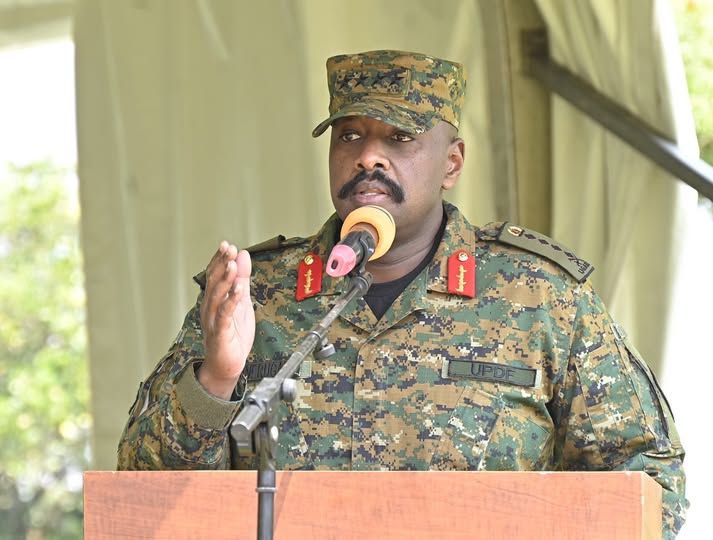
The process will now require written authorisation from the Chief of Defence Forces, General Muhoozi Kainerugaba, President Kaguta Museveni’s son, before customs clearance is granted.
The move comes less than 25 days before the general election scheduled for January 15, 2026, raising concerns about access to independent communications during a politically sensitive period.
A December 19, 2025, internal memorandum from the Uganda Revenue Authority (URA) Customs Control Department directed all customs staff to halt the clearance of any Starlink technology gadgets, communication equipment, or associated components unless accompanied by a clearance or authorisation letter from the Chief of Defence Forces of the Uganda People’s Defence Force (UPDF).
“This communication serves to officially notify staff about the immediate restriction on the importation and customs clearance of Starlink technology gadgets, communication equipment, and associated components,” the memo reads in part.
“Any import declaration of the aforementioned items should be accompanied by a clearance/authorisation letter from the Chief of Defence Forces – Uganda People’s Defence Force (UPDF). This guidance takes effect immediately, and all staff are expected to adhere to it.”
Under the directive, imports at all entry points nationwide must now be vetted and authorised by General Muhoozi.
The policy effectively places control of Starlink equipment imports under military clearance.
The URA memo did not publicly state the reasons for the restriction.
Satellite internet systems can bypass national telecom networks, raising questions about spectrum management, security oversight, and regulatory compliance.
Starlink is a satellite internet service operated by SpaceX, using a constellation of low-Earth orbit satellites to deliver broadband connectivity without reliance on terrestrial infrastructure.
It has attracted interest across Africa for its potential to expand high-speed internet access in rural and underserved areas.
Its first satellites were launched in 2019.
As of October 2025, the service had reached over 150 countries globally and 23 African nations, with more expansions in the pipeline.
The restriction comes several months after President Museveni met Starlink officials for discussions on the company’s proposed entry into Uganda’s telecommunications market.
During that meeting, Museveni expressed interest in Starlink’s ability to provide affordable, high-speed internet to remote and underserved areas.
He described the technology as a potential solution to persistent connectivity gaps in rural Uganda.
“I appreciate their commitment to providing low-cost internet in hard-to-reach areas and establishing a presence in Uganda. They are welcome,” he said in a statement on X.
The directive also arrives in the context of Uganda’s history of internet controls during elections.
In 2021, the government switched off internet services during the general election, a move officials at the time said was aimed at curbing misinformation and disinformation.
For now, importers of Starlink and similar satellite communication devices must secure military clearance before their goods can be processed through customs, adding a new layer of regulatory oversight weeks before nationwide polling.
by SHARON MWENDE