


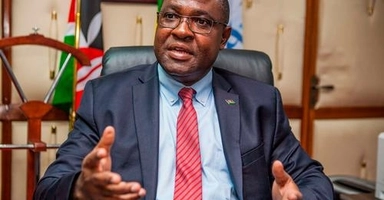
According to the agency’s CEO Justus Wabuyabo, the project is still at a consultative stage and will only proceed after extensive public engagement, safety reviews and environmental assessments.
“While the concerns are genuine, there is no cause for panic. We are still conducting stakeholder consultations and no final decisions will be made without fully engaging the public and addressing all issues raised,” Wabuyabo told the Star.
He said the agency will begin a new round of stakeholder meetings with various groups in the region starting January, aimed at sensitising residents on the importance of the project and demystifying nuclear energy.
“We are continuously engaging the public, and this project is not being imposed. Our aim is to ensure communities are well informed and guided by facts and evidence,” he said.
Wabuyabo said some of the resistance to the project is being fueled by anti-nuclear activists whom he accused of misleading the public and spreading misinformation about nuclear energy.
He noted that NuPEA has already held consultations with several governors from the Lake Region Economic Bloc (LREB), adding that only a few leaders are yet to be engaged.
“We have met a number of leaders in the region and we will continue with dialogue. Communities also need to look at the broader national benefits of the project, especially in terms of energy security and economic growth,” he said.
NuPEA has also rolled out stakeholder outreach programmes, including media campaigns and community workshops, to address misconceptions and explain the global safety record of nuclear power.
The CEO’s remarks come amid growing opposition from a section of Luo elders who have rejected plans to build the 1,000-megawatt nuclear power plant at Luanda Kotieno in Bondo, Siaya County.
The elders cite potential health and environmental risks to communities around Lake Victoria and the wider East African region.
Speaking to journalists after a consultative meeting on Sunday, the elders, led by Deputy Ker Joseph Ayaga, said the decision to oppose the project was unanimous.
“In view of the likely implications of the nuclear plant for health and environmental concerns around the entire East African region, the council resolves to reject in total the plans of going ahead with the project,” the elders said in a statement.
They announced the formation of a technical committee to independently assess the potential risks associated with the plant. The committee will be led by a designated engineer and assisted by a nominee from the Luo Council of Elders as vice-chair.
The team has been given a 60-day mandate to engage communities, evaluate environmental and safety considerations, and submit a comprehensive report to guide the elders’ final position.
The nuclear project was initially considered for Uyombo in Kilifi County before the government shifted focus to Siaya, a move that has heightened public debate.
Critics warn of possible radiation hazards, while supporters, including Siaya Governor James Orengo, have defended the initiative, arguing that nuclear energy is safe and has a strong global track record compared with traditional power sources such as hydropower.
The late former prime minister Raila Odinga also supported the project.
In September, NuPEA identified Siaya County as the preferred location for Kenya’s first nuclear power plant. The Sh500 billion project is expected to initially generate 1,000 megawatts of electricity, with plans to scale up production to 20,000 megawatts by 2040.
Recently, the Kenya Energy Generation Company (KenGen) was designated the owner-operator of the project in line with requirements of the International Atomic Energy Agency (IAEA).
Under IAEA guidelines, countries seeking to establish nuclear power plants must appoint an owner-operator responsible for the physical plant and equipment, licensing and regulatory compliance, staffing and training, and overall operational management.
Owner-operator KenGen will be responsible for safety, security and environmental protection.
Energy Cabinet Secretary Opiyo Wandayi, who witnessed the signing of the agreement last week, called it a strategic milestone. He said it is aligned with President William Ruto’s vision of expanding electricity generation to drive economic transformation.
The government intends to add about 10,000 MW to the national grid to support industrialisation and propel Kenya towards a first-world economy, he said.
by FELIX KIPKEMOI