


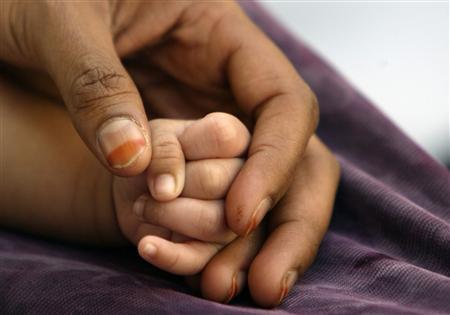
The high rate of babies being born with HIV has again cost Kenya global validation. The World Health Organization last week only validated Brazil for ending vertical transmission of the virus.
WHO’s announcement that Brazil had met the criteria for eliminating mother-to-child HIV transmission highlights a stark contrast with Kenya’s current situation. “Eliminating mother-to-child transmission of HIV is a major public health achievement for any country, especially for a country as large and complex as Brazil,” said Dr Tedros Ghebreyesus, WHO director general.
“Brazil has shown that with sustained political commitment and equitable access to quality health services, every country can ensure that every child is born free of HIV and every mother receives the care she deserves.”
Brazil succeeded in reducing vertical transmission of HIV to below two per cent and achieved high coverage for prenatal care and timely treatment for pregnant women living with HIV.
“This achievement shows that eliminating vertical transmission of HIV is possible when pregnant women know their HIV status, receive timely treatment and have access to maternal health services and safe delivery,” said Dr Jarbas Barbosa, director of WHO in South America.
“It is also the result of the tireless dedication of thousands of health professionals, community health workers and civil society organisations.” While Brazil marked a historic milestone, Kenya recorded a worrying rise in infections among newborns, threatening years of progress.
The National Syndemic Diseases Control Council data indicates that a total of 20,105 new HIV cases were identified in Kenya in 2024. Children under 15 years accounted for 4,349 of the new infections, highlighting persistent vulnerabilities in mother-to-child transmission despite intensive prevention efforts.
The high MTCT rates occur despite relatively high coverage of prevention of mother-to-child transmission (PMTCT) services, which reached about 90.1 per cent in 2024.
“Kenya’s Prevention of Mother-to-Child Transmission coverage stands at 90.1 per cent, yet the mother-to-child transmission (MTCT) rate remains at 9.26 per cent,” the NSDCC said.
Still, the persistent transmission reflects gaps in accessing and completing the full continuum of care for mothers and infants. Kenya’s national HIV elimination targets aim for a less than five per cent elimination of mother-to-child transmission (EMTCT) rate by 2030. To earn EMTCT status, a country must document sustained low transmission rates, typically under two–five per cent, strong antenatal care and treatment coverage, reliable data systems and human rights–oriented service delivery.
Gaps in care are most pronounced in Kenya’s arid and semi-arid counties, where cultural barriers, stigma, and low antenatal attendance persist. In regions such as Wajir, Mandera, Isiolo and Samburu, more than one in five infants born to HIV-positive mothers contract the virus, with some counties reporting rates exceeding 20 per cent.
Botswana is the only African country validated by WHO as having eliminated mother-to-child transmission of HIV as a public health problem, earning Gold Tier status on the Path to Elimination for reducing the transmission rate to around 1.2 per cent and meeting the rigorous service coverage and data criteria.
This makes it the first high HIV-burden nation in the world and the first in Africa to achieve this milestone. A new Unaids report, Overcoming Disruption: Transforming the AIDS Response, warns that sharp donor cuts are destabilising prevention, treatment and community programmes across many countries, including Kenya. Kenya is highly vulnerable to the funding crisis due to its heavy reliance on external support for HIV programmes.
For example, the country’s largest donor, the US President’s Emergency Plan for AIDS Relief (Pepfar), has reduced funding under the “America First” Global Health Strategy. Winnie Byanyima, the Unaids executive director, said in a statement: “
The funding crisis has exposed the fragility of the progress we fought so hard to achieve.Behind every data point in this report are people—babies and children missed for HIV screening or early HIV diagnosis, young women cut off from prevention support, and communities suddenly left without services and care. We cannot abandon them. We must overcome this disruption and transform the Aids response.”
National analyses cited by Unaids show that only about 34 per cent of Kenya’s HIV response is financed domestically, while 63.5 per cent comes from external partners such as the Global Fund and Pepfar.
by JOHN MUCHANGI