


The Murang’a government has started restructuring its budget by moving several programmes from recurrent expenditure to development spending.
The move is aimed at expanding service delivery and easing pressure on the county’s operational costs.
Governor Irungu Kang’ata said the shift will allow the county to grow key social programmes that have remained constrained under recurrent expenditure despite their long term developmental impact.
Among the programmes under review is the medical insurance cover provided to local residents, which Kang’ata said has limited room for expansion when treated as recurrent expenditure.
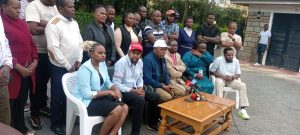
Speaking while hosting Controller of Budget Margaret Nyakang’o, Kang’ata said reclassifying the scheme dubbed Kang’ata Care that benefits over 40,000 households as development spending would allow the county to increase coverage and reach more beneficiaries.
The programme started in 2023 targets households led by orphans, those with chronic illnesses and the extremely poor, enabling them to access health care.
“No county can spend public money without authority. This process will help us to adhere to the law while identifying gaps that need to be addressed,” Kang’ata said.
The governor also cited the free porridge programme for Early Childhood Development Education learners, noting that although it is classified as recurrent expenditure, it plays a key developmental role.
The Uji programme ensures each of the 42,000 learners get a cup of nutritious porridge to help them focus on their learning while enhancing their retention in school.
He added that the county bursary programme should similarly be reclassified since it contributes directly to human capital development as recognised under the Millennium Development Goals.
According to Kang’ata, shifting such programmes to development expenditure would not only improve service delivery but also significantly reduce the strain on the county’s recurrent budget.
He however expressed concerns over delayed disbursements from the national government, saying Murang’a is yet to receive funds for the current month despite the law requiring disbursements to counties to be made before the 14th of every month.
The delayed disbursements, he said, continue to disrupt the operations of county governments.
Nyakang’o said her office routinely visits counties to assess progress in budget implementation and to identify areas where improvements can be made.
She said Murang’a was performing well in budget absorption and had demonstrated responsiveness in addressing queries raised by her office.
The main issue, she added, was the need to formally review and submit proposals on expenditure items that qualify to be shifted from recurrent to development.
“I have already shared the parameters required for reclassification. Once the proposals are submitted, we will review them and offer further guidance,” Nyakang’o said.
She said that while counties have improved over time, the first quarter budget implementation report revealed low development expenditure in many counties.
About 20 counties recorded zero development spending during the period, a situation she attributed largely to delays in county budget approvals.
Nyakang’o reminded counties that under the Public Finance Management Act, county budgets must be approved by county assemblies and forwarded by governors by July 1 to allow immediate implementation.
“It is not enough for counties to blame delayed releases by the National Treasury when they do not have approved budgets to absorb the funds,” she said, urging counties to speed up their budget making processes.
She also called on counties to prioritise development expenditure in order to create jobs and stimulate local economies.
Nyakang’o commended Murang’a for embracing automation in its operations, saying the progress made is impressive and should be replicated by other counties.
According to the County Governments Implementation Review Report, county governments are owed Sh124.95 billion in revenue arrears from land rates, house rent and the health insurance contributions.
The report faulted county administrations for failing to recover the funds comprising Sh112.47 billion in ordinary own-source revenue, Sh7.46 billion from the Social Health Insurance Fund and Sh5.01 billion from the defunct National Health Insurance Fund.
by ALICE WAITHERA