

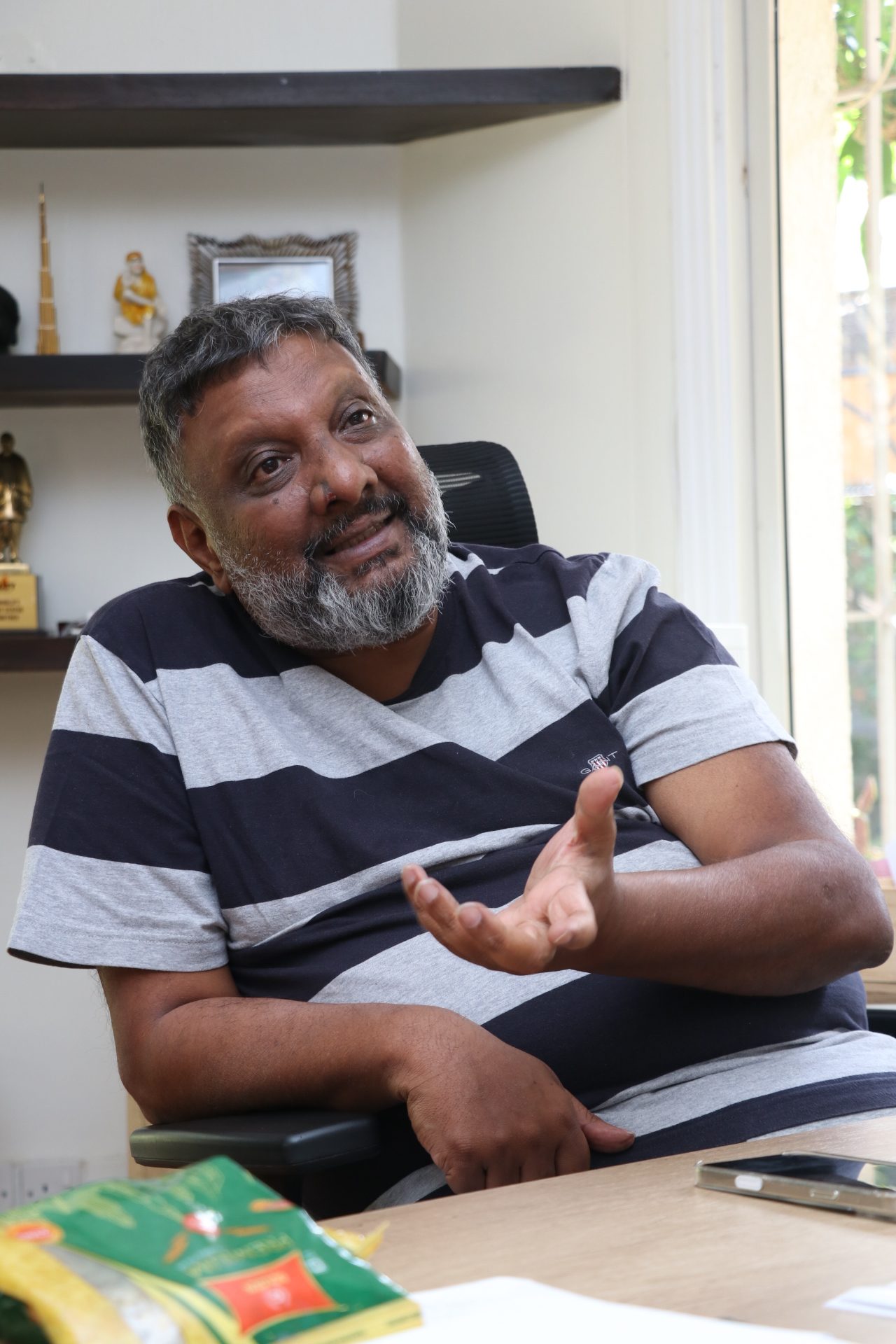
This is how Pankaj Shah describes his education: “It was not in a classroom.”
The Form 4 dropout soon learnt that the rough streets of Nairobi would have to be his teachers. So every day, after a long day shift in a small factory in Industrial Area, he would take matatu No 11 and head to Ngara, take a quick shower, change into a clean shirt and start his second shift as a restaurant waiter.
“I would work until midnight,” he tells the Star in an interview about being voted a POY for his free social services. “Even now, my hours are still 18 hours, I work long, long hours.”
Pankaj still shuffles between two jobs. The first is a tourism company he founded after the hotel job. The second is where he devotes most of his time nowadays, Pankaj Social Services (PSS).
The tourism firm pays his bills. The second job feeds his soul.
Thousands of Kenyans and foreigners have nominated him for The Star Person of the Year for his work at the PSS.
His non-profit feeds 30,000 slum school children daily, mostly in Nairobi. It also provides free eye screenings and at least 4,000 free cataract surgeries per year. PSS also makes monthly cash transfers to more than 280,000 people and distributes relief food to 500,000 people per year, among other services.
Pankaj founded the non-profit in 2020 when Covid-19 restrictions grounded his tourism business.
In those early weeks of the pandemic, Pankaj found himself reflecting on a desire that arouse since he travelled to Calcutta (Kolkata) in 1996 and met St Mother Teresa. She died the following year.
“I worked for three and a half months with Mother Teresa in Calcutta. So compassion was built in there when I was only 23 years old. Now I’m 60.”
Pankaj says compassion was natural in 2020 when Sister Mary and other nuns working in Nairobi slums told him, “Pankaj, we are in very bad trouble. There is no food in the slums. People are sleeping hungry.”
“And so I said okay, let me help you.”
He donated a few sacks of maize flour, but this quickly grew into something much larger. His friends and a growing network of volunteers brought food hampers and together with Pankaj, distributed them across Nairobi’s informal settlements.
This was the genesis of what would become Pankaj Social Services, a non-profit formally registered in June 2021.
“It was time,” he says. “Time to use every lesson the University of Life had given me. And it became bigger and bigger. So by December 2020, we did almost one million bags of food in the slums of Nairobi.”
Once the lockdown was lifted, Sister Mary returned. “Sister Mary, who has been running Mukuru Promotion Centre in Mukuru, told me, ‘You know, schools are starting and we don’t have food for the children. If we don’t have food for the children, how will the children come to school? They only come to school because of the food’.”
“So we started feeding the children there,” Pankaj says.
Pankaj Social Service now reaches more than 30,000 children every day through its daily school feeding programme, providing nutritious meals that keep them in class and fuel their learning.
He says the logic is simple and profound: a child who eats is a child who learns.
In the morning, they get a carrot, a sweet potato or a boiled potato with a cup of uji. At lunchtime, they get a rice or wheat meal with vegetables. The children are mostly in Nairobi, but some schools in Kilifi, Kwale and Laikipia have been enrolled in the PSS feeding programme.
The donations come mostly from Indian families, especially from the Jain community who donate all their lives as part of their religious commitment.
“So if it’s like somebody’s birthday, he will call me and say, ‘It’s my birthday today, what do you want?’ So I tell him, give me 2,000kg of rice. Just now, somebody has donated 15 tonnes of beans. Some people donate towards one child, some people donate towards 10,000 children, like that,” Pankaj says.
Another PSS pillar is eye health. In partnership with hospitals and county health authorities, the organisation runs free eye screening and surgery programmes that reach rural and underserved communities.
Overall, the organisation’s health programmes have delivered more than 50,000 free eye screenings and more than 4,000 free eye surgeries this year, restoring sight and hope to individuals who had accepted their future as blind people.
“We are going to cover the whole country, as many counties as we can,” Pankaj says. “So next year we hope to do 12,000 free eye surgeries. Twelve thousand people will get eye operations. That’s a lot of eye operations. The whole government does about 1,000 a year, free ones.”
His medical initiatives extend beyond vision care. There are birthing programmes that support expectant mothers and physiotherapy services for children with disabilities, part of PSS’ comprehensive approach to health and dignity.
Pankaj Social Services has also invested in bee-keeping initiatives, vocational training and distribution of sewing machines, gas cookers and other equipment that enable individuals, particularly women, to start small businesses or expand their skills.
PSS also distributes solar lights to families with schoolchildren and to schools.
In June 2020, President Uhuru Kenyatta recognised these efforts and awarded Pankaj the Covid Hero award, the Uzalendo Award.
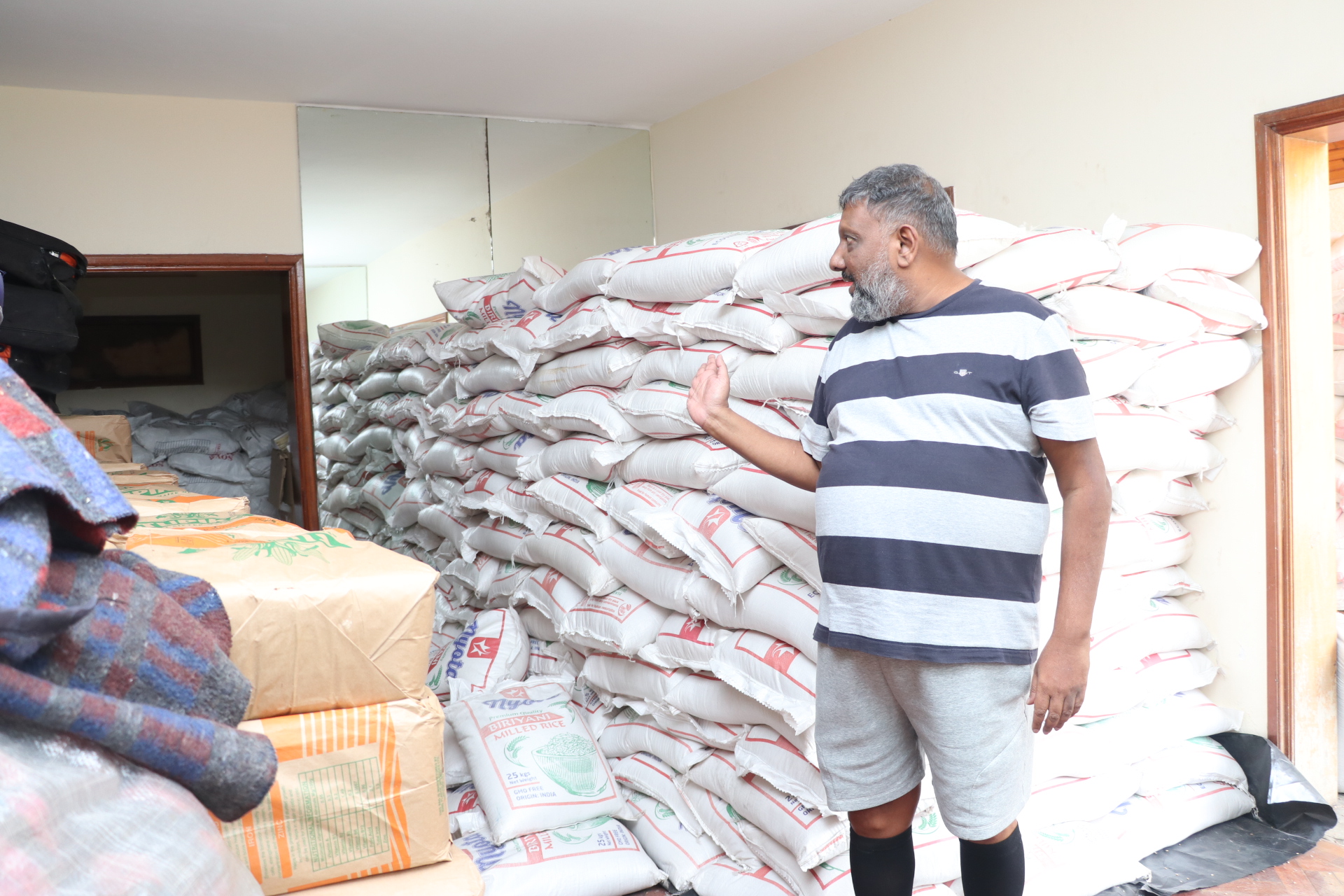 Pankaj Shah at his food stores at PSS offices in Muthaiga in Nairobi. Photo/ Leah Mutashi.
The organisation was nominated for the Covid Relief Task Force to distribute 500,000 bags of food in northern Kenya.
In 2022, President William Ruto also recognised the work of PSS and bestowed on the founder the Moran of Burning Spear. He requested that he join the National Steering Committee on Disaster Response, alongside Safaricom CEO Peter Ndegwa and others.
“And I was in charge of identification, logistics and distribution of food,” Pankaj says. “And with that committee, we distributed almost one million packets of food. We also did a lot of cash transfers to places we could not reach.”
PSS Covid-19 relief reached more than 160,000 families. The organisation also made monthly cash transfers to 280,000 people. Its famine and drought relief support has reached more than 500,000 families.
Donors usually experience what’s known as ‘compassion fatigue’ in which individuals may become less willing to contribute to charitable causes due to an overwhelming need and number of requests, a lack of perceived impact, or emotional burnout from constant crises.
Pankaj, who is a Jain, says he understands this risk, but forestalls it through prayers. “Prayer is the answer to everything. I pray for hours a day. I pray for almost three hours every day, morning from 3 am.” He is married and his family supports his work.
“We do this because every human life has worth,” he tells the Star. “A child who can see, a mother who can feed her family, a family that doesn’t sleep hungry. That is why we exist.”
His plan is to lift 1.2 million women out of poverty in 10 years.
“So we have a big empowerment project coming through,” Pankaj says. “It is going to distribute another 10,000 beehives because bees are very good for our environment. We are also encouraging women to plan trees.”
This year, PSS planted about 60,000 trees. Next year they plan to plant 600,000 seedlings. “Then, the year after, we will keep on doubling and quadrupling the tree planting. We have a big seedling nursery.”
He encourages young people in Kenya to learn about philanthropy and take it to heart. “If you are making Sh10,000, you give back Sh100 or you give back Sh200,” Pankaj says. “If you cannot afford to give people cake, give them bread.”
by JOHN MUCHANGI