

At 52, Faith Mukui had mastered the art of survival. Each morning in Wote’s Shimo Estate, she rose with the sun, scanning the day for vibarua—short, unpredictable jobs that could mean a meal by evening or hunger by nightfall. Life had taught her to expect little and endure much.
Born to a single mother and unable to bear children herself, Mukui learned self-reliance early. Food, emotional support, and even friendship were luxuries she rarely enjoyed. Loneliness, she says, became a companion long before old age.
“God has been my only constant friend,” she reflects quietly.
“People I trusted turned against me when I needed them most. I have been laughed at all my life.”
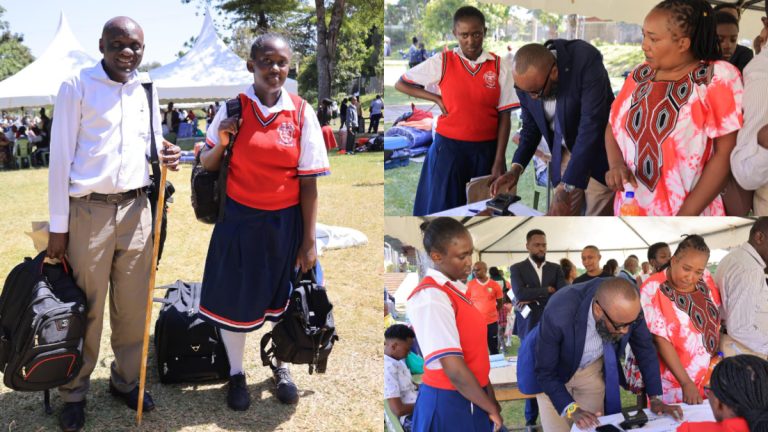
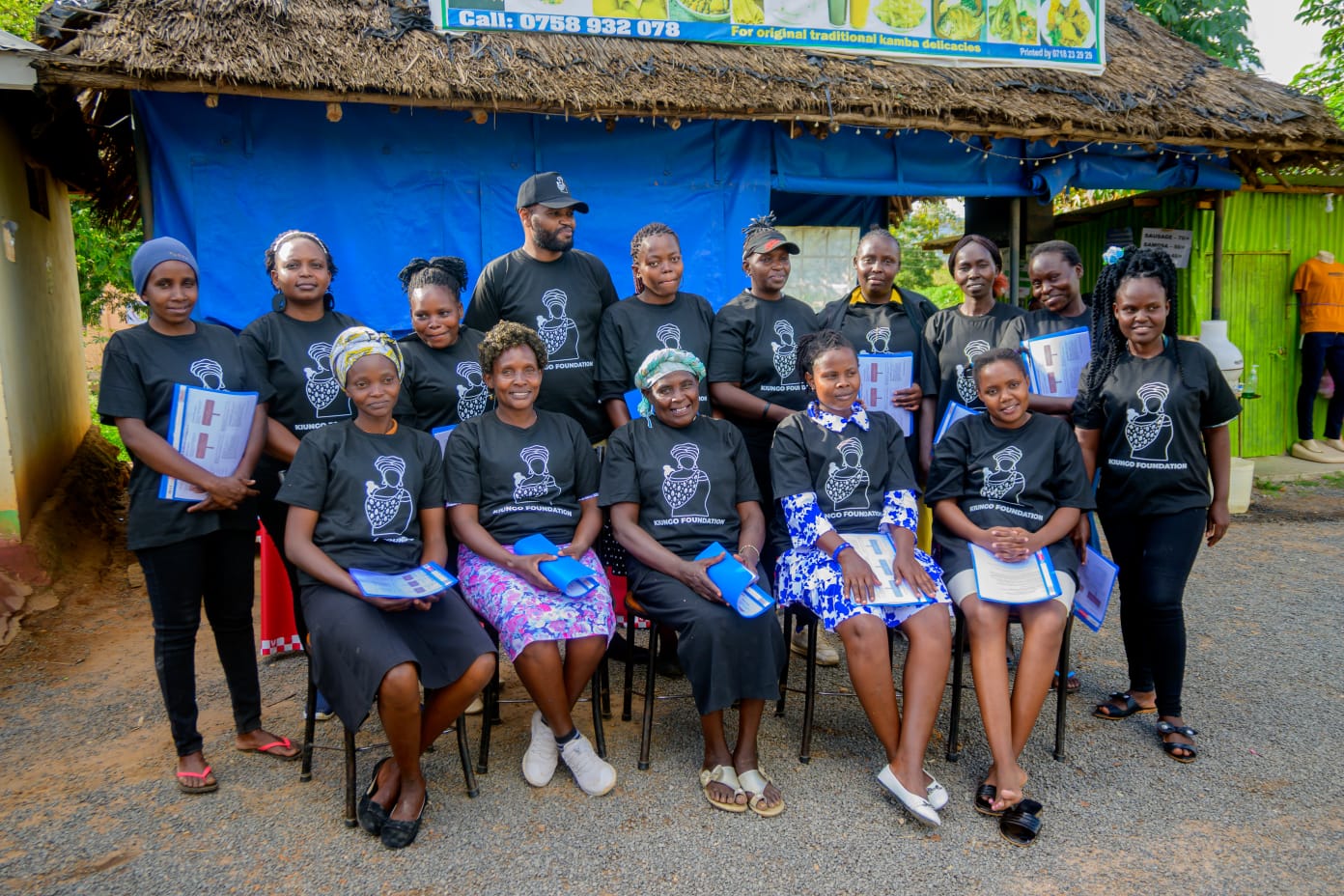 Women beneficiaries pose for a photo with their coordinator, Edward Mwendwa (back row), during their end-of-year annual meeting in Wote./HANDOUT
It was only after moving into an estate that she discovered how deeply society judged childlessness.
“Women I thought were my friends distanced themselves when they realized I had no children. I didn’t know barrenness was considered a taboo until I lived it,” she says, her voice heavy with memory.
For years, Mukui struggled to stay afloat through a small tailoring business—an old sewing machine in a worn-out shop, with profits barely covering rent.
Yet even in hardship, she carried a quiet dream: to adopt a child and build a family of her own. It was a dream she believed her meagre earnings would never allow.
Then one ordinary morning changed everything. As she stepped out of her house on her way to her shop, Mukui literally bumped into a middle-aged man who introduced himself as Edward Mwendwa.
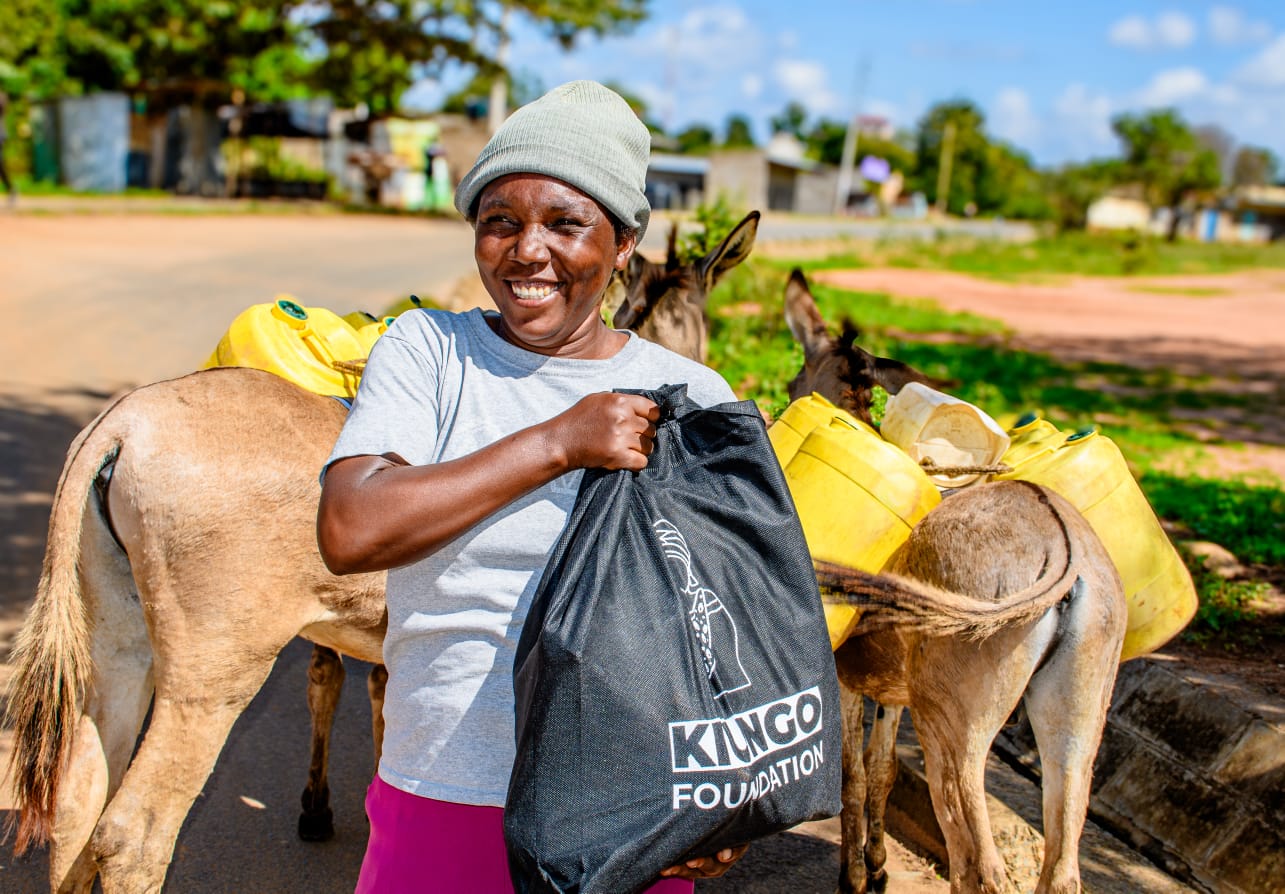 A joyful Wote resident smiles after receiving a free Christmas gift hamper from Kiungo Foundation./HANDOUT
He told her he was looking for single women in the area, hoping to bring them together to form a group that would eventually uplift their lives.
Mukui listened.
“The moment he spoke, I knew this was someone God had sent,” she says. “When I met Mwendwa, I felt he was the person who could help me pursue my long-held desire to adopt a child.”
A week later, she joined about 50 women at Kwa Mutindi Restaurant, a popular eatery in Wote, where the group held its monthly meetings. For Mukui, it was more than a gathering; for the first time in years, she felt embraced by a family.
Behind the initiative is Mwendwa, a communication specialist who serves as the link between the women and a couple from the Netherlands, Fenna and Maurits.
This December, Fenna, Maurits and friends delivered Christmas hampers to more than 200 low-income households across Wote. Mwendwa hopes the initiative will inspire organisations and individuals to support humanity at every level.
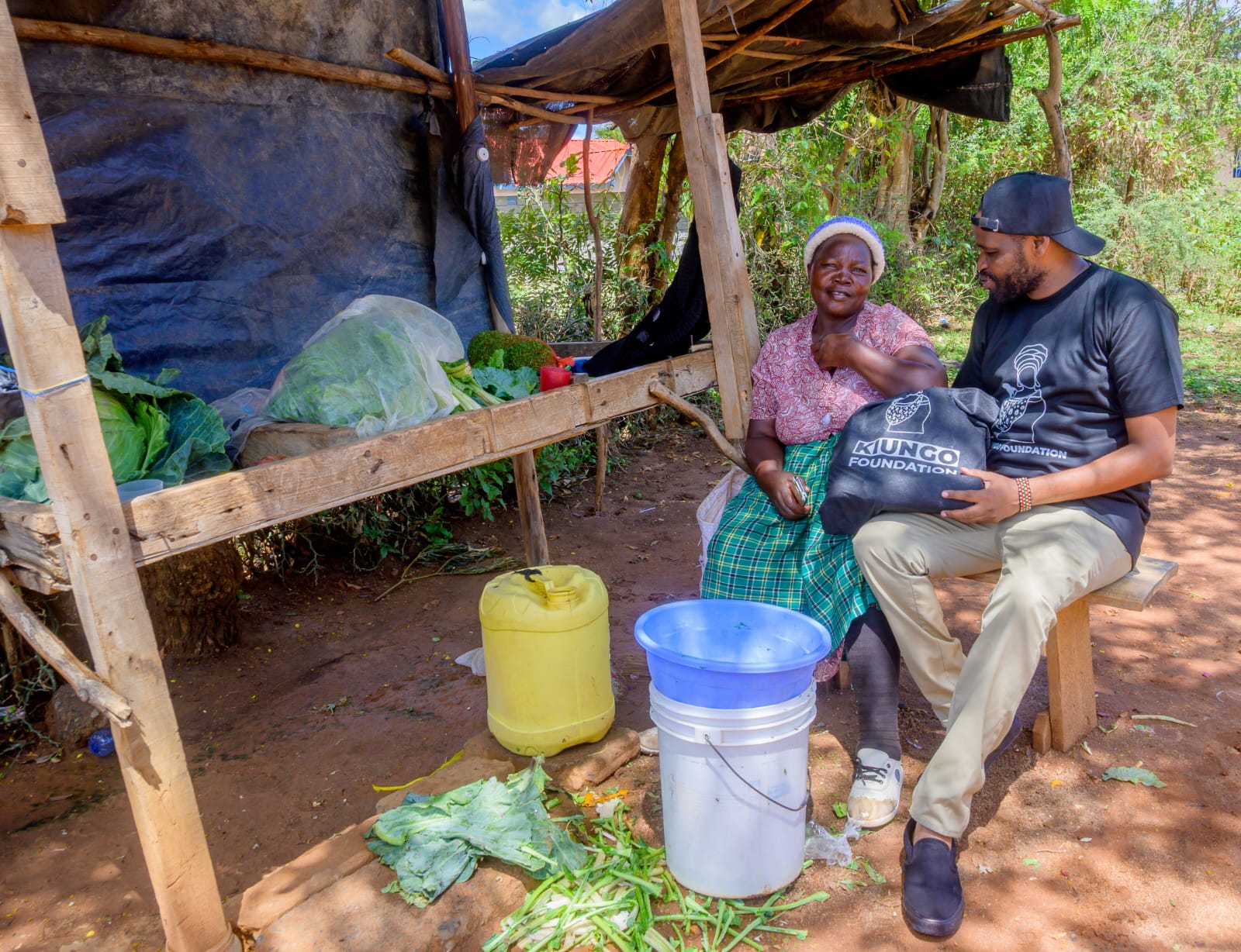
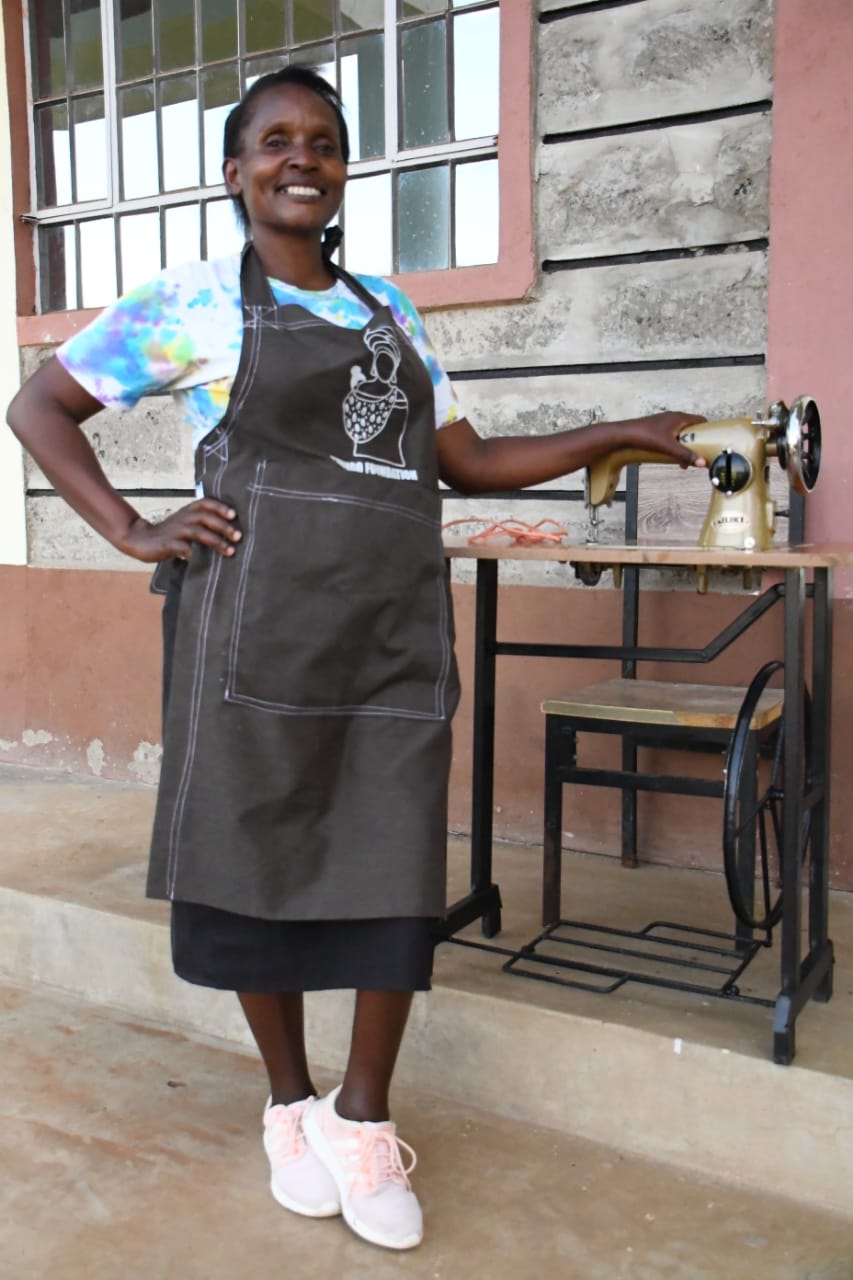 Faith Mukui, a resident of Wote, displays her new sewing machine donated by Kiungo Foundation, a boost to her tailoring business and livelihood./HANDOUT
Together with his wife, Mwendwa visits each woman’s homestead, assessing needs and coordinating support ranging from food aid to small capital for micro-businesses.
The partnership was born unexpectedly.
While visiting Kenya to see a mutual friend, Fenna and Maurits once stopped at a roadside kibanda and tasted chapatis that left a lasting impression.
A conversation with the cook revealed she was a single mother fending for herself and her daughter.
When the couple returned to the Netherlands, they wanted to know how they could help women like her. Mwendwa became the answer.
“When they reached out, I didn’t hesitate,” he recalls. “I remember stopping women along the road as I drove home, asking what they did for a living and whether they were married. Some thought I was joking and walked away. Others stayed, and that’s how this journey began.”
At the time, many of the women were barely surviving.
Some skipped meals. Others slept on torn mattresses or could not afford school fees. Hope, for many, had become fragile. Today, the stories sound different.
Caroline Mwende, for instance, was abandoned by her husband after he survived a road accident and disappeared, leaving her with two children and no support. Her grocery kiosk collapsed under mounting pressure, and her children missed school repeatedly due to unpaid fees.
“I suffered depression, poverty, and shame. I didn’t know how to overcome them,” she recalls. “But God never forsakes His own. Today, Mwendwa has been a source of joy in our lives.”
Just a few metres from Caroline’s plot lives Everline Mwende, a widow left to raise four children after losing her husband, the family’s sole provider. Her Grade Seven daughter stayed home for months due to fee arrears, while her younger sons had never stepped into a classroom.
Through the network coordinated by Mwendwa, Fenna, Maurits, and their friends stepped in.
Today, Mwende’s children are in school, food is guaranteed, and she runs a small retail shop in Wote’s Malawi area, earning about Sh800 daily.
Every month, the women return home carrying supplies like rice, wheat flour, maize flour, and cooking oil. They carry dignity.
“This is our way of cushioning them from the vagaries of economic uncertainty,” says Mwendwa.
He believes the impact of such support goes far beyond individual households.
“Supporting even one woman to make it through is equivalent to uplifting an entire village,” he notes, adding that women are natural agents of change whose progress guarantees sustainable development.
For Faith Mukui, the journey is still unfolding, but it no longer feels lonely. Her tailoring business is stabilizing after she received a brand-new sewing machine, and for the first time in decades, the future holds promise.
by EVELYN MUTANU