

Women in Garissa have urged community elders to allow them to make independent choices on who should lead them in the 2027 general elections.
Like other counties in northern Kenya, Garissa has long relied on ‘negotiated democracy’ when picking candidates for various elective seats.
The system, introduced after the advent of devolution in 2013, is meant to foster cohesion by allowing clans to agree on flagbearers.
But in practice, it has largely excluded women from decision-making, leaving them only to vote for candidates chosen by men.
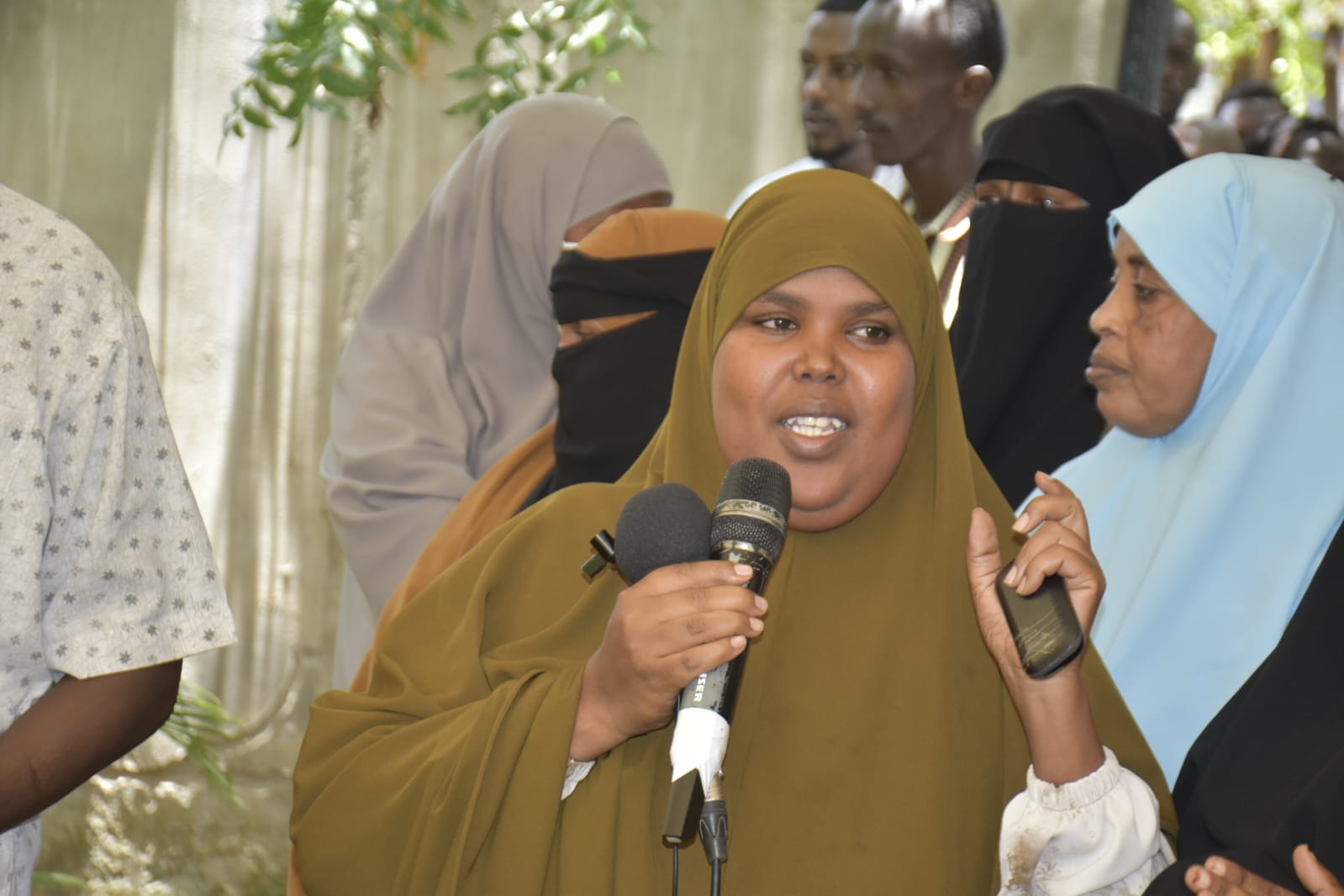
Speaking at a meeting of women from the Samawadhal clan to endorse gubernatorial aspirant Ahmed Abass, the women said the system has become a tool for sidelining them and stifling their role in leadership.
Khatra Ahmed, a local women’s leader, said inclusive leadership was essential if the county is to progress.
“Our gathering here as women drawn from the Samawadhal clan is a clear indication of the political direction we have taken. We have unequivocally decided to support Abass for the governorship without any persuasion,” she said.
“And as we do so, we respectfully call upon our elders, community leaders, and political actors to respect our decision to make independent choices about who we want to lead us.”
Khatra praised Abass, the former Ijara MP, for consistently empowering women, supporting the marginalised and promoting education—values she said were missing in many leaders.
She also challenged women to step into elective politics and urged men to back them at the ballot.
Amina Mohamud echoed the call, saying negotiated democracy must evolve to include gender equity, youth participation and broader civic engagement.
“All we are saying is that we should not be sidelined. We need to be at the centre when it comes to electing our leaders. Our gathering here to endorse Abass is a clear testimony of that,” she said.
Kheira Ismail, another participant, challenged women to actively engage in the 2027 election by scrutinising aspirants and voting only for those with a proven record of development.
“As women, we are the ones who suffer most when development stalls due to poor leadership. We have the opportunity to correct that in the coming general elections. Let us unite and make our votes count,” she said.
Supporting Abass should not be misinterpreted as disregarding other communities, she added, but as a decision to rally behind one of their own.
Abass will face off with former governor Ali Korane, ex-Lagdera MP Mohamed Shidiye, Kenya’s consul general in Arusha Abdi Dubat and Water Resources Authority CEO Mohamed Shurie.
by STEPHEN ASTARIKO