


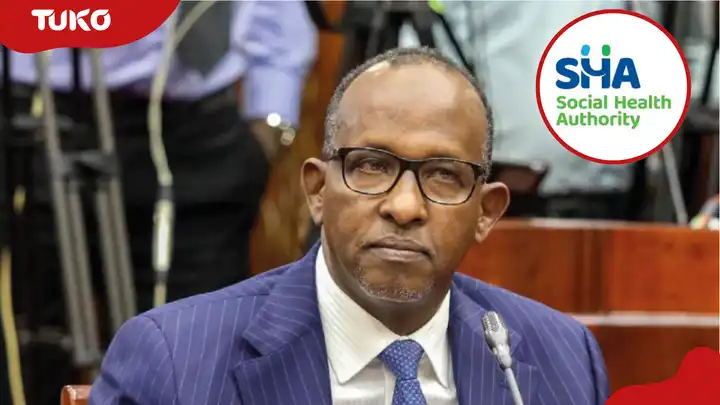
The government’s ambitious goal is universal health coverage (UHC), which would guarantee that all Kenyans, regardless of income, have access to reasonably priced, high-quality healthcare. But there are visible cracks. Health Cabinet Secretary Aden Duale addressing journalists during a past press briefing in Nairobi. Photo: Aden Duale. Source: Facebook Over 80% of Kenya’s workforce is comprised of informal workers, yet only 27% of them are enrolled. The health system as a whole is affected by hospitals’ complaints of unpaid bills from the NHIF era. The budget is at the heart of the issue. In the fiscal year 2024–2025, the government spent Ksh232 billion on health.
Although it sounds enormous, Kenya is still falling short of the Abuja Declaration benchmark, which calls for African nations to allocate at least 15% of their national budgets to health, coming in at about 11%. That shortfall represents the billions of dollars in lost services, medications, and equipment. The Social Health Authority: What is it? The SHA was created as a statutory body to take the place of the NHIF. Its goal is to guarantee equitable access and more effectively pool health resources. The SHA unifies health financing into three programs in place of the disjointed and frequently dishonest NHIF model: Primary Healthcare Fund, to assist community-based clinics and dispensaries.
The Emergency, Chronic, and Critical Illness Fund provides coverage for catastrophic cases. The Essential Benefits Fund provides general health coverage. The goal is to eliminate the leaks and duplications that beset NHIF by implementing a “one-stop” financing model. Why is SHA having trouble? Legacy debts: NHIF owes hospitals billions. Since many facilities are hesitant to treat patients on the SHA promises until money actually flows, this unpaid backlog has damaged trust. Low uptake of informal workers: The majority of Kenyans who work in the informal sector, such as mama mbogas, jua kali artisans, and boda boda riders, barely make ends meet. They view monthly contributions as a risk, especially in situations where public health facilities lack adequate equipment. Operational kinks: Mechanisms for preventing fraud, member verification, and digitisation are still inconsistent. As a result, the SHA is vulnerable to the same inefficiencies that brought down NHIF.
Budget mismatch: Although Ksh232 billion has been set aside, health economists caution that this amount won’t cover all of the gaps, particularly in light of the growing expense of medications and an overworked workforce. The nerdy budget analysis Let’s do some math. The entire national budget for Kenya in 2024–2025 is approximately Ksh3.3 trillion. Kenya would receive roughly KSh495 billion for health if it were to reach the 15% goal outlined in the Abuja Declaration. Instead, it is getting Ksh232 billion, which is less than half of that amount. Examine it per person now. This amount corresponds to approximately KSh4,200 per person annually for the approximately 55 million Kenyans. That comes to about Ksh350 a month, which is hardly enough to pay for a single doctor’s appointment, let alone tests, medications, or hospital stays.
In contrast, South Africa spends more than Ksh20,000 per person on health care each year. The disparity explains why medications run out in Kenyan hospitals, why equipment malfunctions, and why patients frequently have to pay cash for necessities. Because underfunding is the difference between stocked pharmacies and empty shelves, between operational ambulances and patients waiting hours for transfers, this math is important. CS Aden Duale delivers remarks during a meeting at the Pentagon in Arlington, Virginia. . The more important question is whether they receive better care when they go to a public hospital. The question still stands for informal workers: is it worthwhile to join a system that might fail them in times of crisis?
The government maintains that SHA is UHC’s future. However, hospitals must pay off their previous debts, trust must be restored, and the financing model must reach a critical mass. Kenyans are left wondering until then whether SHA is a true health revolution or merely NHIF with a new look. The bigger picture Goal 3 of the Sustainable Development Agenda calls for universal health coverage, so it’s not just a Kenyan ideal. However, as demonstrated by the Abuja Declaration benchmark, funding continues to be the weak point. UHC risks becoming a perpetual promise rather than a lived reality unless Kenya and other African nations close the health budget gap.
Source: TUKO.co.ke